Common Sense

I’m going to say this bluntly because I think a lot of people need a reality check right now. Everyone mad at Trump needs to zoom out for two seconds and realize what’s actually on the line here.

You don’t have to blindly defend anyone. Criticism is fair when it’s earned. And Trump has earned criticism. But I’m not going to let Trump’s mean tweets (even when they are problematic or in poor taste) distract me from the bigger picture. There’s a MASSIVE difference between holding someone accountable and completely abandoning the mission. Because the alternative to Trump would mean a fundamental change of the country… for the WORSE.

Think about what the Democrats are pushing right now. Mass amnesty. Demographic change. Opening borders. Violence in every city. Federal abortion on demand. Gun control. Hatred of America, the nuclear family, and Christianity. Gender confusion, castration of children, and LGBT ideology in the schools.

That’s the part people are ignoring. If the other side regains full control, it won’t just be a rough couple of years. The damage will be SO catastrophic that you won’t even recognize your country anymore. And the same people shrugging it off now will be the ones wishing they stood by Trump’s side when it mattered.

So yes, feel frustrated. Call things out when they deserve it. But don’t lose the plot.

If you have read my posts, then you know EXACTLY what we’re up against in the midterms. The party that cheered Charlie Kirk’s death (and would cheer yours too) offends me MUCH more deeply than anything Trump has said. If they regain power, they would be more than happy to make sure we have the same fate as Charlie.

Wake up. This isn’t the time to check out!  — Dean Fouquet

President Trump

He sacrificed his vast wealth, his thriving businesses, his hard-earned public image, his cherished friendships, and his enduring legacy. He nearly sacrificed his life in a moment of grave danger for this nation. No one loves America with greater depth, passion, and unwavering devotion than Donald J. Trump. 🇺🇸

Easter…

Adoration of the Mystic Lamb on display in Ghent, Belgium


Read Exodus 12. Tenth of the month, lamb selection is Palm Sunday. Passover, Crucifixion was on the fourteenth. Check a calendar, try May. If the tenth is a Sunday then the fourteenth is a Thursday.

When the gentile believers decided on passion week traditions, they didn’t study the Torah but just the gospels.

Read Leviticus 23.
Just like Christmas is a day but also a season. Passover and unleavened bread get blurred in the vernacular.
In Lev 23 we see Passover, the next day starts the seven days of unleavened bread
  The first day is a day of no work, an annual feast Sabbath. During the seven days would be a weekly Sabbath. The day after, during the seven day feast, would be the feast of first fruits.

Now a biblical day starts at sundown, not midnight like our current calendar. See genesis 1 six times evening and morning is a day. Also Exodus 12 18 Leviticus 23 32 and Psalm 55

Wed night that year, translating to our calendar, was the last supper – a gallilean tradition worth researching. Thursday at 3 pm Messiah died just at the time of the Passover lamb
See John 19:31. Preparation day for an especially important Sabbath. Prep day is the day before. Luke 23:54 more general “a Sabbath”.
The men place Jesus in the tomb, the women go home and prepare spices (not realizing the men had them). They rested for 2 Sabbaths. Matthew 28 1 when literally translated says Sabbaths. This was translated out, people assumed it was a copy error.
Mark 16:1. Sat night after the Sabbath ( ends at sundown). The women go buy more spices. Verse 2 in the morning go to the tomb

Mark 16:9. Early on the first day, ie Sat night, He arose.

Thursday afternoon, 5th day Crucifixion to Sat night First day Resurrection.
3 days and 3 NIGHTS in the grave. 5th day, 6th night and day, 7th night and day, 1st night

He also arose on the third day (of unleavened bread).
He arose on first fruits. See 1 Corinthians 15
https://icogsfg.org/jc-wavsh.html

It wasn’t about the day of the week but the 3 spring feasts of Leviticus 23. Pentecost fulfills Shavuot. The 3 fall feasts foreshadow the second coming.

Early first century believers kept Sabbath Acts 15 21 then met Sat night to honor the resurrection Acts 20:7.

Easter

The word “Easter” is often the first casualty in the war over holiday origins. For nearly 200 years, a “Rogues’ Gallery” of myth-makers—from the sectarian Alexander Hislop to the nationalist Brothers Grimm—has claimed the word is a “baptized” pagan goddess.
👉 The evidence says otherwise.
⭐ 1. The Translation:
When the Gospel reached the English and Germanic tribes, they faced a choice: adopt the Latin Pascha or translate the concept into their own tongue. While the Franks rolled over and became Romanized (giving us the French Pâques), the Saxons stood their ground. They didn’t keep a goddess that didn’t exist; they translated a reality.
* The Event: The Resurrection.
* The Season: The period of the “Rising Sun” or “Early Dawn.”  It was a reference to the season of the year when the dawn started earlier each day.
* The Word: Easter (Old English: Eastron) which comes from the ancient German word for east / dawn, ōstarūn.  It has zero connection to any verifiable pagan German goddess and absolutely nothing to do with Ishtar the Babylonian goddess of war and prostitutes.
⭐ 2. The “Ishtar” Phonetic Trap:
The claim that “Easter” comes from the Babylonian “Ishtar” is a 19th-century fabrication (aka A LIE) by Alexander Hislop (1807-1865) and popularized by the bonafide heretic and cult leader, Herbert W. Armstrong (1892-1986).

The claim relies on a sketchy phonetic coincidence that ignores 3,000 miles of geography and entirely different language families. It is the historical equivalent of claiming a “Car” is named after a “Cartoon,” or a baseball “bat” is named after a flying mammal.
⭐ 3. The “Goddess” Ghost:
The only historical mention of a goddess named Eostre comes from a single sentence by the monk Bede in 725 AD. Bede was a brilliant scholar, but he was “filling in the gaps” by speculation based on the naming conventions of Julian calendar.
* The Absolute Zero Reality:
There are zero altars, zero inscriptions, and zero mentions of this goddess in any other Germanic territory (Gothic, Norse, or Frankish).
* The Linguistic Proof:
Every Germanic language uses the root Austr- to mean “East” or “Dawn.” The Goths in Eastern Europe were using this root 400 years before Bede was born. It is a compass point, not a cult.
⭐ 4. A Reformation Before the Reformation:
Using the word Easter was the opening salvo in a 1,300-year struggle to worship God in the common tongue. By refusing to use the Latin Pascha, the Saxons asserted that the Resurrection belonged to their language and their identity as believers.
👉 The Verdict:
Those who call Easter “Pagan,”  aren’t debunking a myth; they are repeating propaganda from the lies of Hislop to the dechristianization attempts of the Nazis to the invention of hippie nature paganism that has little resemblance to the actual dark Celtic paganism it claims to follow.

BTW: bunnies and eggs have nothing to do with ancient fertility symbols.  They come from Germanic folk traditions.  The claim  they come from Babylon is just flat out make believe. 

Eggs were forbidden during lent.  Hard boiling them was part of the process to preserve them.  Coloring them was to help in identifying them and as a way to celebrate the end of the fast.  And that ancient statue people claim has “eggs” all over its chest isn’t Ishtar but the unrelated goddess, Artemis of Ephesus.  Those aren’t eggs but bull testes.

The first mention of the The “Easter Hare”  appears in 1682 in a German medical dissertation by Georg Franck von Franckenau. He describes it as a local folk myth. It has no connection to any ancient goddess.

The Neo-pagan claims that eggs and bunnies are their ancient fertility symbols is a modern fabrication.  They took non-religous add-ons and claimed them as their own.  To be clear, modern nature paganism compared to ancient Celtic paganism is a bigger stretch than claiming New Coke tasted exactly the same as Coke Classic. The original “dark” paganism was a world of blood-oaths and sacrifice; the modern version is a romanticized “nature-vibe” built on 19th-century myths.

👉 Easter isn’t a pagan holdout or rebranding. It is a Saxon Declaration of Independence in the fight to worship God in one’s own language and not the language of Rome (Latin).
________________
⭐ Technical Note for the Curious:
The spelling Easterne (as found in the Anglo-Saxon Chronicle) and the Old High German Ōstarūn share a plural suffix. This indicates that “Easter” wasn’t a person, but a season of dawns—the time of year when the light finally overtakes the darkness. It is the perfect linguistic match for the Resurrection.

Pastorwardclinton.com

The Cross

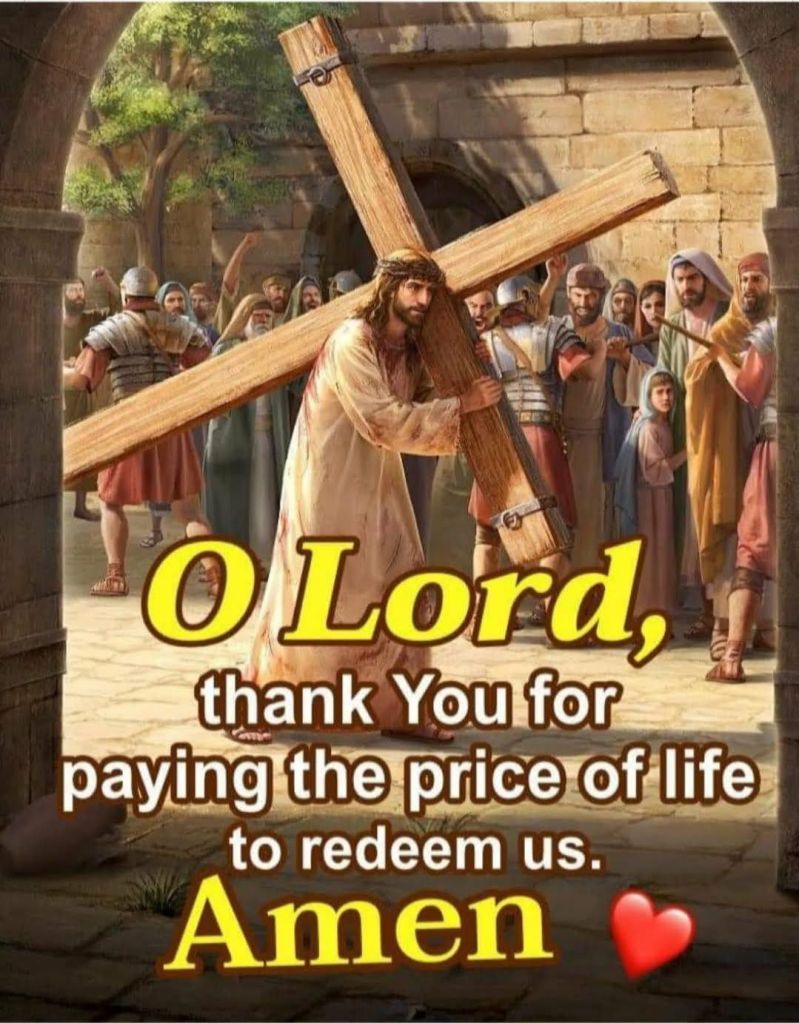
The wounds on His head, hands, and feet each bear significance.  Easter (Resurrection Sunday) helps believers understand the significance of the crucifixion and what was accomplishd through the Christ’s death.

John 19:31-37  The Jews therefore, because it was the preparation, that the bodies should not remain upon the cross on the sabbath day (for that sabbath day was an high day), besought Pilate that their legs might be broken, and that they might be taken away.

Then came the soldiers, and brake the legs of the first, and of the other which was crucified with Him.

But when they came to Jesus, and saw that He was dead already, they brake not His legs:

But one of the soldiers with a spear pierced His side, and forthwith came there out blood and water.

And he that saw it bare record, and his record is true: and he knoweth that he saith true, that ye might believe.

For these things were done, that the scripture should be fulfilled, A bone of Him shall not be broken.

And again another scripture saith, They shall look on Him whom they pierced.

    They wanted Jesus off the Cross because the next day was a high Sabbath (Passover day proper), followed by a regular Sabbath.

    This year Passover begins at Sundown, April 2nd making Friday a high Sabbath followed by a regular Sabbath.  Whenever we understand that He was Crucified on Thursday, the timeline makes far more sense than the way we traditionally look at Holy Week.

    His body is taken down by Joseph of Arimethia and Nicodemus at about 3pm and taken to the tomb, the time that the preparation for the Sabbath begins.

<pastorwardclinton.com>

My King

March 29, 2026 I celebrated that day the King of Kings rode into town nearly two thousand years ago.

The Spiritual Implications That Leftists Do Not, Nor Will Not Understand…

Their ‘No Kings’ Proclamation Runs Deeper Than Their Hatred and Disapproval of Trump…

It Sets Precedent within Their Hearts…

‘No King’ But Themselves…

“We’ll Take Barabbas Over the ‘King of All Kings’…Please and Thank You…”
=^]>

Christ Brings Meaning to L-I-F-E

Christ Brings Meaning to L-I-F-E


“I am come that they might have life, and that they might have it more abundantly” (John 10:10).

I.      L-ove (Loving Through Christ)

“Beloved, if God so loved us, we ought also to love one another” (I John 4:11).

As the followers of Christ were to be exposed to the hatred of the world, it was no small consolation to them to know that that hatred would be only in proportion to their faith and holiness; and that, consequently, instead of being troubled at the prospect of persecution, they should rejoice, because that should always be a proof to them that they were in the very path in which Jesus himself had trod.


A.  Life has little meaning to some because they possess so little love. Christ loved us and died for us, paying the penalty for our sins. When Christ is Lord of our life, He should be the love of our life also.

B.   Christ’s love brings meaning to our life. His love must reach out through us to help, comfort, and share Christ with others (Matt. 28:19).

Make disciples of all nations, bring them to an acquaintance with God who bought them, and then baptize them in the name of the Father, and of the Son, and of the Holy Spirit.


II.     I-nstruction (Learning from Christ)

“I will instruct thee and teach thee in the way which thou shalt go: I will guide thee with mine eye” (Ps. 32:8).

Blessed are the forgiven


  1. When we are forgiven, cleansed, and filled with the love of Christ, we have just begun to live. We still have much to learn. We will continue to face frustrations and pos­sible failure.


B.   We must depend on Christ’s Holy Spirit for guidance and direction. He will help us through frustration and will bring victory and meaning to life as we keep on praying, learning from His Word, trusting, and obeying.


III.    F-reedom (Liberty in Christ)

“Stand fast therefore in the liberty wherewith Christ hath made us free, and be not entangled again with the yoke of bondage. (Gal. 5:1).


  1. Many are bound (entrapped) by sinful pleasures, social pressures, and sensual practices. They are in bondage to themselves, others, and Satan. Life has little meaning as a result.


B.   Christ came to bring freedom from the bondage of sin. He breaks the fetters that bind and sets free all who come to Him in repentance and faith.


C.   Christians are liberated and their lives become mean­ingful. When one’s sins are forgiven, one’s heart is cleansed. One is free to help others find their way to heaven (John 8:36).


IV.   E-ternal Life (Living with Christ)

God hath given to us eternal life, and this life is in his Son” (I John 5:11).

A.  Everyone wants to live. But only those who have ac­cepted Christ as Savior and Lord will live eternally.

B.   Life here on earth is brief at best. We should make the most of it. This life can have real meaning only if we are prepared for the next life.

C.   Christians look forward with anticipation to living forever with Christ. He has gone to prepare a place for them. He has promised to return and receive them unto Himself (John 14:1—3).

Pastorwardclinton.com

Jesus the Christ

Let’s settle something history already settled. You can debate theology. You can debate doctrine. But denying that Jesus of Nazareth walked this earth is not really a faith debate. It is a historical one. And historically speaking, Jesus is one of the most documented figures of the ancient world. Not just in the Bible. Outside of it.

Non Christian historians wrote about Jesus without trying to promote Christianity.

Tacitus was a Roman historian who wrote about Christus being executed under Pontius Pilate during the reign of Emperor Tiberius. Tacitus was not a believer. He actually viewed Christians negatively. Yet he still documented that Jesus was a real historical figure who was crucified.

Josephus was a Jewish historian who referenced James as the brother of Jesus who is called Christ. That is powerful because it is coming from a Jewish historical perspective, not Christian preaching.

Pliny the Younger wrote about early Christians worshipping Jesus as God. This shows that very early followers were not treating Jesus like just a teacher. They were treating Him as divine.

None of these men were trying to build Christianity. They were recording what they observed in their world.

Archaeology also lines up with the Gospel record. Evidence confirming Pontius Pilate as a real Roman governor was discovered. Evidence connected to Caiaphas the high priest was discovered. Even Nazareth, which critics once claimed was made up, has been confirmed as a real first century town.

The manuscript evidence for the New Testament is stronger than most ancient historical writings. The time gap between when events happened and when they were written down is much smaller than most ancient documents historians trust every day. Yet people rarely question those documents. They only question Scripture because of what it claims.

The Gospels were written close enough to the events that eyewitnesses were still alive. If Jesus was not real, the movement would have been crushed quickly. Instead, Christianity spread under intense persecution. People were beaten, imprisoned, and killed and still refused to deny what they said they saw. People might die for something they believe is true. They rarely die for something they know is a lie.

Then you have the prophetic layer. The Old Testament described details about the Messiah long before Jesus was born. Details about where He would be born. How He would suffer. How He would be rejected. How He would be pierced. These were written centuries before the crucifixion.

Serious historians are not really debating whether Jesus existed. The real debate is who He was. Because Jesus did not present Himself as just a good teacher. He claimed authority to forgive sins. He claimed unity with God. He predicted His death and resurrection.

You can reject church culture.
You can reject organized religion.
You can reject Christian doctrine.

But rejecting that Jesus lived requires ignoring Roman records, Jewish historians, archaeology, manuscript history, and early eyewitness testimony.

That is not blind faith. That is historical reality.

The real question was never whether Jesus existed.

The real question has always been what will you do with the fact that He did.