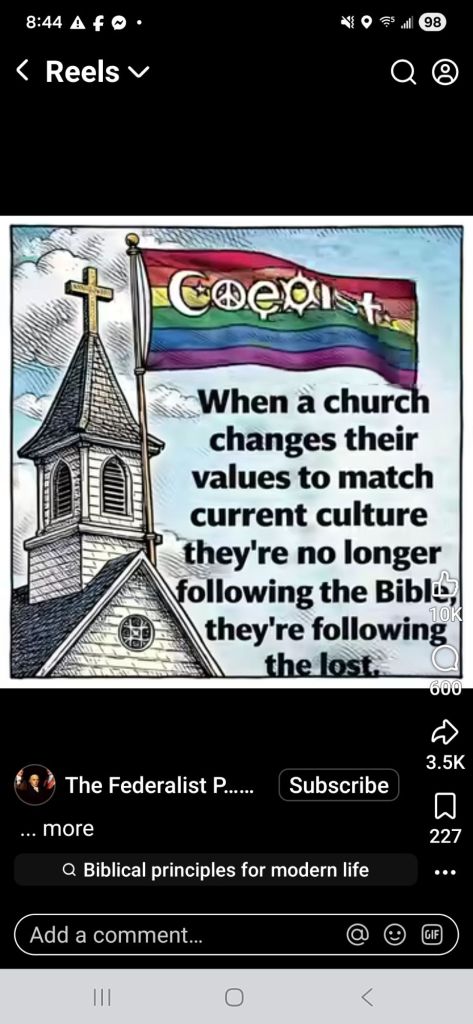
It is an undoubted truth that every doctrine that comes from God leads to God; and that which doth not tend to promote holiness is not of God. –George Whitfield Lev_11:44 For I am the LORD your God: ye shall therefore sanctify yourselves, and ye shall be holy; for I am holy: neither shall ye […]
The Follower of the One True God must be Holy (part 2)
Tag: Holy One of God
Christian Values

This really sums it up.
For years, we have been told that Christian values are the problem. They are too restrictive, too old fashioned, too judgmental, too limiting. The message has been drilled into the culture over and over again, freedom means removing every moral boundary, every inherited standard, and every inconvenient truth.
But the cartoon gets to the heart of the issue.
“I don’t want Christian values limiting my freedom in life.”
Then comes the answer.
“Ok, we got rid of them.”
And suddenly the path to “life” is broken, crumbling, and dangerous.
That is the part so many people miss. Christian values were never meant to be a prison. They were guardrails. They were the foundation that helped build strong families, honest communities, personal responsibility, respect for life, respect for marriage, respect for children, and respect for something bigger than the self.
Take those away, and you do not get some enlightened utopia.
You get confusion.
You get broken homes.
You get people chasing freedom while becoming slaves to impulse, ideology, government dependency, and cultural insanity.
The left has spent decades mocking the very values that held society together, then acts shocked when the results show up in the streets, schools, courts, and homes.
They wanted a culture without judgment, then wondered why standards disappeared.
They wanted freedom without responsibility, then wondered why chaos followed.
They wanted life without the values that protect life, then wondered why everything started falling apart.
That does not mean every Christian is perfect. It does not mean every church has always gotten everything right. But it does mean the basic moral framework that shaped this country mattered far more than our elites ever wanted to admit.
Maybe the “limits” were not the problem.
Maybe they were the only thing keeping the road from collapsing.
A Tale of Two Reverends

The one is legit, the other is not … by their fruit ye shall know them.
The left is hating on the one while embracing the other.
T.D.S. prevents them from seeing the good in Rev Graham and it may even play a part in their continued patronizing of the Race-bating-poverty-pimp.
The one feeds the poor while the other fleeces the poor.
One will be able to enter Heaven, the other doesn’t have a snowball’s chance.
He who has ears to hear, let him hear.
And may God Bless
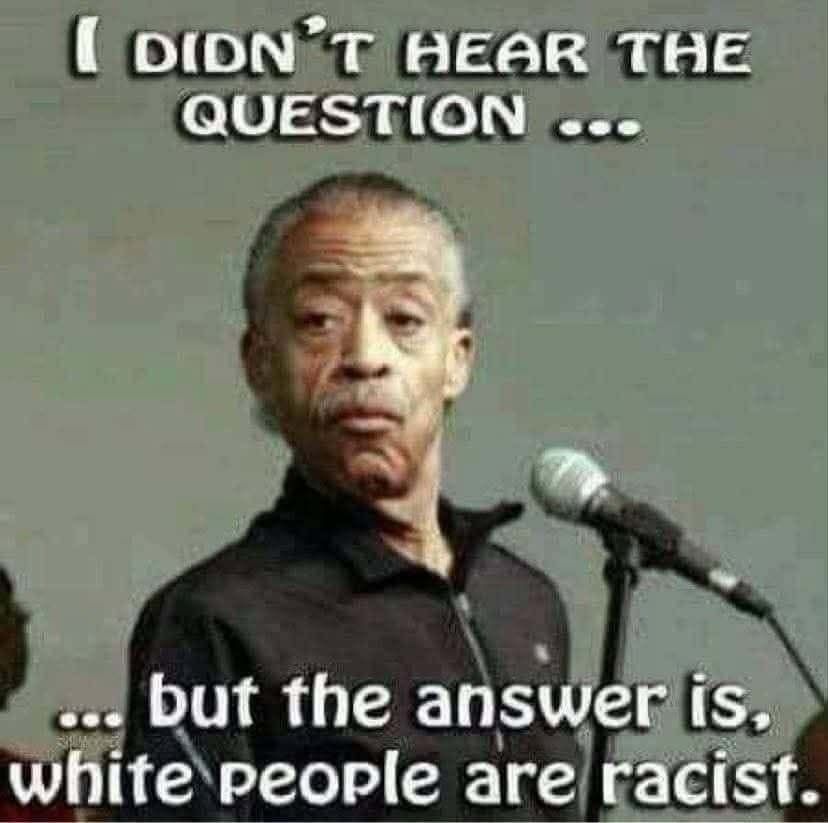
Someone needs to help this man wake up to the fact that he is working for the evil one, not Jesus the Christ. pastorwardclinton.com
God Bless President Trump

Something is happening in America that the enemy does not want you to see.
April 20–26.
Believers across this nation will read the entire Bible aloud — 12 hours a day — from the Museum of the Bible in Washington D.C.
And President Donald Trump will read from the Oval Office.
The chapter he chose?
2 Chronicles 7.
Not a feel-good passage.
Not a political speech.
A covenant call to national repentance.
“If my people who are called by my name will humble themselves and pray and seek my face and turn from their wicked ways — I will hear from heaven, forgive their sins, and restore their land.”
God didn’t say the government would fix it.
He didn’t say the election would fix it.
He said His people would have to move first.
Humility. Prayer. Seeking His face. Turning.
Four conditions. One promise.
You can watch it live — free — on Great American Pure Flix.
April 20–26. Streaming now.
The Word is going out.
The question is whether the Church will respond or just watch.
— Pastor Joshua David
Pastorwardclinton.com
My King
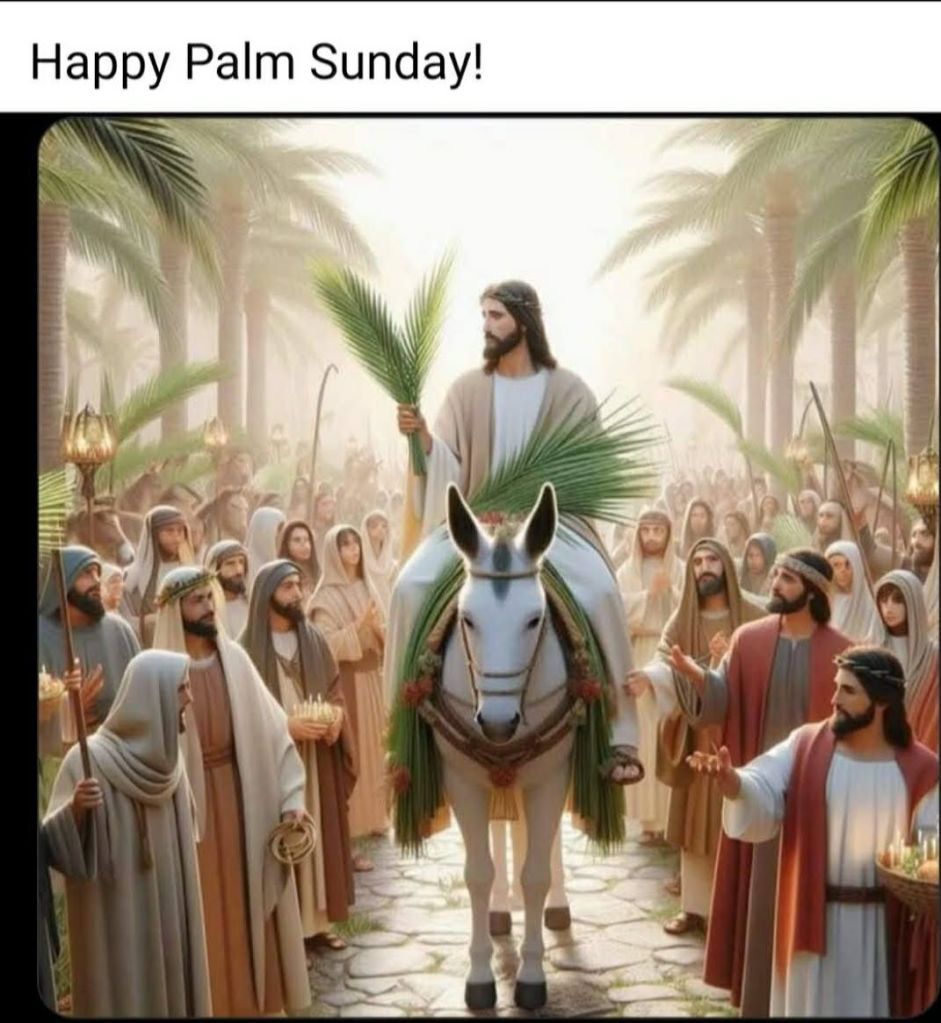
March 29, 2026 I celebrated that day the King of Kings rode into town nearly two thousand years ago.
The Spiritual Implications That Leftists Do Not, Nor Will Not Understand…
Their ‘No Kings’ Proclamation Runs Deeper Than Their Hatred and Disapproval of Trump…
It Sets Precedent within Their Hearts…
‘No King’ But Themselves…
“We’ll Take Barabbas Over the ‘King of All Kings’…Please and Thank You…”
=^]>
This World is Not Our Home
I see people living as if they expect to live here forever, building, digging in, fortifyng themselves, perparing for many years, when, if the truth could be seen, a few short months are all that are left.
A story from an unnown source; a prosperous man was stricken by disease one day in his office. He was placed in the hospital, where there appeared before him a vision of a stranger, a stranger seemingly from another world. The stranger said, “I am Death, and I have come for you.” “Oh,” cried the ill man, “I am not prepared to die. I cannot die now! Give me one more chance. I promise to prepare for you, and to be ready the next time you call.” Strange to say, Death took him at his word and gave him another chance. He improved and was soon back in his office and at his work. Like hundreds before him, with the return of good health came the old habit of rejecting the Christ. He failed to keep his promise. A few weeks later he was again stricken with disease, and aain was placed in the ambulance and taken to the hospital, where he was the second time approached by the stranger. “I am Death,” said the stranger, “and I have come for you.” “But,” cried the patient, “I am not ready for you. I cannot die now. Give me one chance more. I promise to be properly ready next time you come.” But it was too late. Death had come this time to take him. Certainly Death is coming for us all. For a season we can stay the grim hand, but for a season only. All too soon he will come to call for us and will not be denied.
The next world is our forever home, choose carefully which it will be; the one with Jesus the Christ or the one without Him.

Global or United
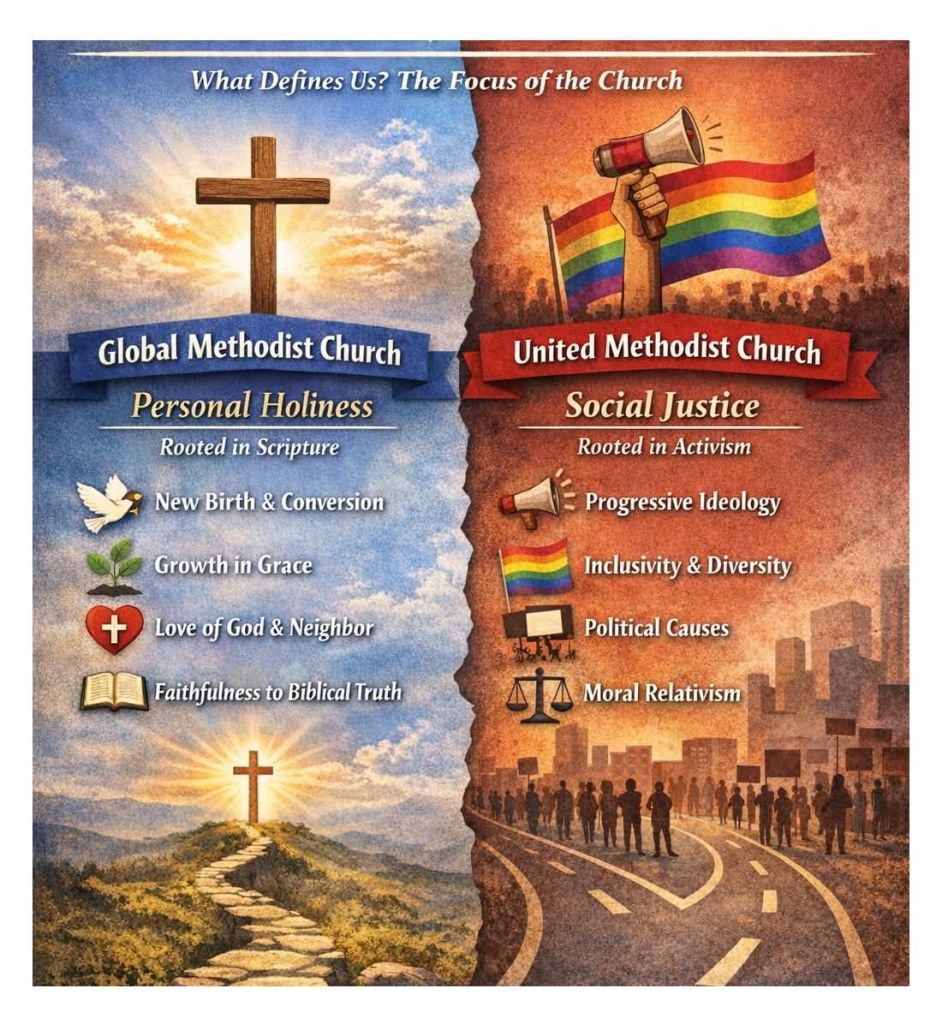
Right vs Left
See Ecclesiastes 10:2
Christ Brings Meaning to L-I-F-E
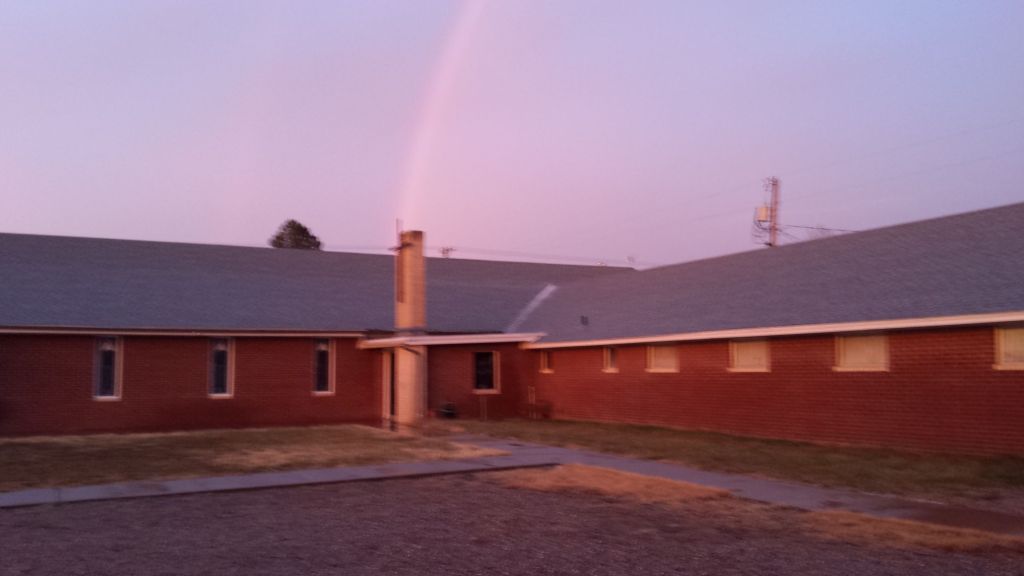
Christ Brings Meaning to L-I-F-E
“I am come that they might have life, and that they might have it more abundantly” (John 10:10).
I. L-ove (Loving Through Christ)
“Beloved, if God so loved us, we ought also to love one another” (I John 4:11).
As the followers of Christ were to be exposed to the hatred of the world, it was no small consolation to them to know that that hatred would be only in proportion to their faith and holiness; and that, consequently, instead of being troubled at the prospect of persecution, they should rejoice, because that should always be a proof to them that they were in the very path in which Jesus himself had trod.
A. Life has little meaning to some because they possess so little love. Christ loved us and died for us, paying the penalty for our sins. When Christ is Lord of our life, He should be the love of our life also.
B. Christ’s love brings meaning to our life. His love must reach out through us to help, comfort, and share Christ with others (Matt. 28:19).
Make disciples of all nations, bring them to an acquaintance with God who bought them, and then baptize them in the name of the Father, and of the Son, and of the Holy Spirit.
II. I-nstruction (Learning from Christ)
“I will instruct thee and teach thee in the way which thou shalt go: I will guide thee with mine eye” (Ps. 32:8).
Blessed are the forgiven
- When we are forgiven, cleansed, and filled with the love of Christ, we have just begun to live. We still have much to learn. We will continue to face frustrations and possible failure.
B. We must depend on Christ’s Holy Spirit for guidance and direction. He will help us through frustration and will bring victory and meaning to life as we keep on praying, learning from His Word, trusting, and obeying.
III. F-reedom (Liberty in Christ)
“Stand fast therefore in the liberty wherewith Christ hath made us free, and be not entangled again with the yoke of bondage. (Gal. 5:1).
- Many are bound (entrapped) by sinful pleasures, social pressures, and sensual practices. They are in bondage to themselves, others, and Satan. Life has little meaning as a result.
B. Christ came to bring freedom from the bondage of sin. He breaks the fetters that bind and sets free all who come to Him in repentance and faith.
C. Christians are liberated and their lives become meaningful. When one’s sins are forgiven, one’s heart is cleansed. One is free to help others find their way to heaven (John 8:36).
IV. E-ternal Life (Living with Christ)
God hath given to us eternal life, and this life is in his Son” (I John 5:11).
A. Everyone wants to live. But only those who have accepted Christ as Savior and Lord will live eternally.
B. Life here on earth is brief at best. We should make the most of it. This life can have real meaning only if we are prepared for the next life.
C. Christians look forward with anticipation to living forever with Christ. He has gone to prepare a place for them. He has promised to return and receive them unto Himself (John 14:1—3).
Pastorwardclinton.com
We Should Make Spiritual Progress
….. let us lay aside every weight, and the sin which doth so easily beset us, and let us run with patience the race that is set before us” (Heb. 12:1).
The writer (Paul) makes an allusion to the Olympic games. As those who ran in the Olympic races would throw aside everything that might hinder them in their course, in a similar manner Christians, desiring to go to heaven, must throw aside everything that might hinder them in their Christian race.
Let us start, run on, and continue running (press on) until we get to the goal. Some claim one only has to start the race and then it has already been won. Scripture clearly indicates otherwise; one must constantly continue to exert the effort to become more and more like the Christ in all our ways, thoughts, words, and deeds.
I. We Think
“For as he thinketh in his heart, so is he” (Prov. 23:7).
A. Many dwell on the negative side. Their pessimism brings disappointment to themselves, discouragement to others, and displeasure to God.
Bad tempered people never seem to learn, and as a result bring troubles upon themselves repeatedly.
Moral uprightness is more important than wealth, and wise action is more important than hasty action. People are foolish, very foolish, when they blame God for the trouble they brought upon themselves through their own mistakes.
B. We must think positively, crowding out negativism with thoughts of faith, hope, and love (Phil. 4:8). Finally, brethren, whatsoever things are true, whatsoever things are honest, whatsoever things are just, whatsoever things are pure, whatsoever things are lovely, whatsoever things are of good report; if there be any virtue, and if there be any praise, think on these things.
The object of the apostle is to recommend holiness and righteousness to them in every point of view; and to show that the Gospel of Christ requires all its professors to have the mind that was in Christ, and to walk as he himself also walked. That they were not to attend to one branch of righteousness or virtue only, but to everything by which they might bring honor to God, good to their fellow creatures, and credit to themselves.
John 15:4 Abide in me, and I in you. As the branch cannot bear fruit of itself, except it abide in the vine; no more can ye, except ye abide in me.
John 15:5 I am the vine, ye are the branches: He that abideth in me, and I in him, the same bringeth forth much fruit: for without me ye can do nothing.
John 15:6 If a man abide not in me, he is cast forth as a branch, and is withered; and men gather them, and cast them into the fire, and they are burned.
II. We See
“Looking unto Jesus the author and finisher of our faith”
(Heb. 12:2).
- Our world is filled with sin, suffering, and sorrow. Many become bitter because they see only the faults and failures in others.
- If we are not making progress then we are regressing.
Hebrews 12:15 Looking diligently lest any man fail of the grace of God; lest any root of bitterness springing up trouble you, and thereby many be defiled;
Bad examples and false teachings have corrupted thousands, and are still making desolation in the world and in the Church.
Be a good example; you can do it!
Where’s the Beef?
Where’s the Beef?
Do you remember a popular television commercial of some years ago that featured an older woman looking at a hamburger? With an expression of bewilderment on her face, she asked the server in the fast-food restaurant, “Where’s the Beef”? Her predicament is somewhat analogous to the feelings of persons who look for the substance of holiness in the lives of Christians today. Where the beef of holiness? Where’s that thing that makes Christians different from non-Christians? Where is the Christ-likeness? That ingredient of Christian experience that John Wesley described as religion itself. Where’s the beef of Christianity? Where is that similarity to the spirit and mind of Christ?
Look at what poll after poll; study after study, says about the conduct of those who call themselves Christian compared with those who do not. The divorce rate is reported to be slightly higher among those who call themselves Christian. Of course, not everyone who calls himself a Christian actually is.
The Holy Spirit inspired the writer of the gospel of Jesus according to Matthew to preserve these words of Jesus from His Sermon on the Mount: 7:19-23 “Every tree that does not bear good fruit is cut down and thrown into the fire. Therefore by their fruits you will know them. Not everyone who says to me ‘Lord, Lord,’ shall enter the kingdom of heaven, but he who does the will of My Father in heaven. Many will say to Me in that day, ‘Lord, Lord,’ have we not prophesied in your name, cast out demons in Your name, and done many wonders in Your name?
And then I will declare to them, ‘I never knew you; depart from Me, you who practice lawlessness!’”
The Calvinistic claim “I sin every day in thought, word, and deed; can’t help it – that’s just the way it is” sounds very much like standing on sand. Where’s the Beef of Christianity? Most of the Christ followers stuck in that rut don’t intend to justify their carnality they just haven’t been shown the considerably more firm footing of Holy Spirit empowered heart holiness. It is a footing that allows us to stand firm and reflect Christ-likeness so that others will say “there it is! That thing that makes Christians different from non-Christians.”
Sin is spoken of in the Bible as filthiness or defilement of the body, mind, or spirit. Purity in Religion must mean, therefore, the absence of such filthy things as drunkeness, gluttony, dishonesty, cheating, falsehood, pride, malice, bad tempers, selfishness, unbelief, disobedience, or the like. In short, to be pure in soul, signifies deliverance from all and everything which the Lord shows you to be opposed to His Holy Will. It means that you not only possess the ability to live the kind of life that He desires, but that you actually do live it.
Holiness Possible
The Church of The Nazarene believes in holiness. Holiness is our distinguishing tenet. That’s what we are all about – perfect love, Christian perfection, being filled with the Spirit, entire sanctification. The Church of The Nazarene is not a generic church. We are not all things to all people. We believe that God teaches that regeneration is the work of God’s grace, preceded by repentance and obtained by faith. We also believe regeneration is to be followed by another work of grace – entire sanctification, that act of God that frees believers from original sin and brings them into a state of complete commitment to God. Entire sanctification is provided by the blood of Jesus and wrought by the Holy Spirit to this experience the Holy Spirit bears witness.
Sanctification begins when a person is justified by faith, converted, and progresses as a believer who grows in God’s grace and conforms more and more in obedience to Christ. Believers are entirely sanctified when they are filled with the Holy Spirit, cleansing them from a sinful nature. This experience is available to the seeking Christian.
We must not allow the failures of others to persuade us that holiness is impossible. We must not justify our own uncleanness of heart and become callused in sin. We must not settle for an experience and a lifestyle that is less than holy. When this happens we begin to blame others for our moral failures, or we blame environments and situations. All the while we continue to be jealous, manipulative, proud, dominating, unkind, critical, and self-serving. All the while those who don’t have time for church continue to say “Where’s the Beef?” They are pleading for us to be the salt and light which Christ called us to be.
J. B. Chapman said, “I got saved so I could get sanctified.” Phineas Bresee said, “A sanctified life is a delight to Jesus, a joy to the soul, a benediction to the home, a power in the church, a terror to sin, and a continual disappointment to the devil.”
Eph 2:8-10
For by grace you have been saved through faith; and that not of yourselves, it is the gift of God; not as a result of works, that no one should boast.
For we are His workmanship, created in Christ Jesus for good works, which God prepared beforehand, that we should walk in them. (NAS)
Matt 7:19-23
“Every tree that does not bear good fruit is cut down and thrown into the fire.
“So then, you will know them by their fruits.
“Not everyone who says to Me, ‘Lord, Lord,’ will enter the kingdom of heaven; but he who does the will of My Father who is in heaven.
“Many will say to Me on that day, ‘Lord, Lord, did we not prophesy in Your name, and in Your name cast out demons, and in Your name perform many miracles?’
“And then I will declare to them, ‘I never knew you; depart from Me, you who practice lawlessness.’ (NAS)
<pastorwardclinton.com>