Did you know that the time clock of the return of Jesus Christ isn’t based on America’s timeline? It’s based on what is happening in Israel. Did you know Jesus wasn’t a “Christian” ? He was a Jew. He celebrated and kept the Jewish holy days and customs, as well as the feasts of the […]
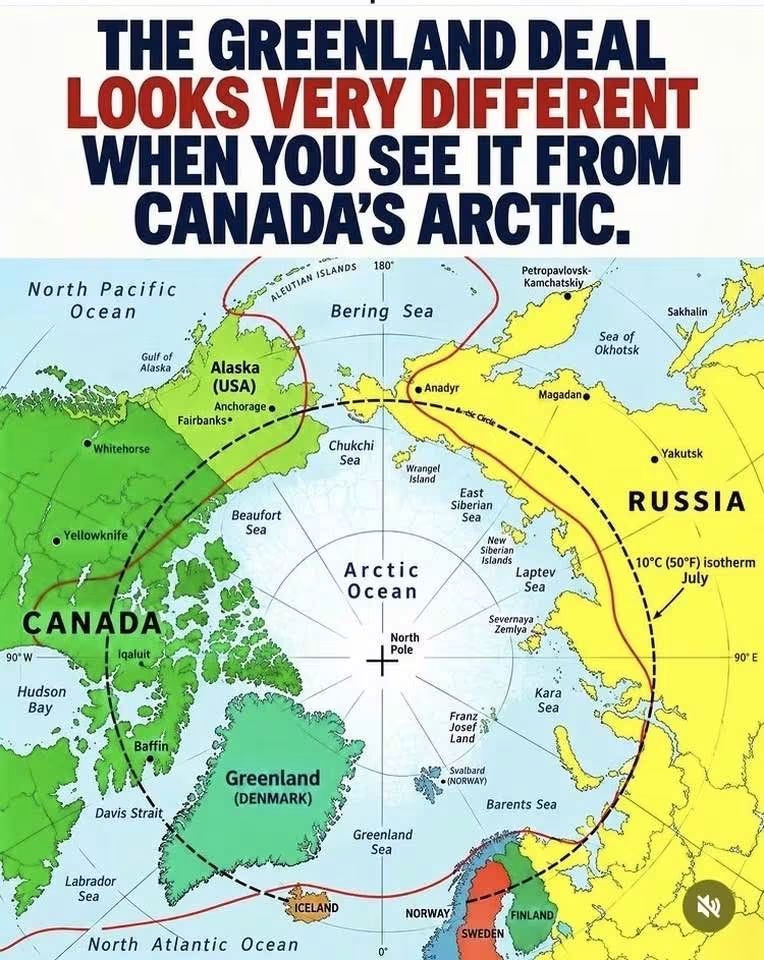
Trump just struck a deal with Denmark and Greenland for a permanent, expanded U.S. military presence in Greenland, while barring non-NATO military bases. Greenland remains under Danish sovereignty. But geographically, look at what Greenland is: Canada’s eastern Arctic flank, facing Russia across the Arctic. Now look at the whole map. Alaska to our west. Greenland to our east. Russia across the Arctic. Canada in the middle. That matters more today because the security environment is changing quickly. Yesterday, Polish Prime Minister Donald Tusk warned that intelligence from NATO, Ukraine and the U.S. indicates Russia may be preparing drone or rocket attacks against NATO countries while attempting to make them appear accidental. Today, France warned that Russian hybrid attacks involving drones, cyberattacks and sabotage are intensifying. Canada clearly recognizes the Russian threat. Since the full-scale invasion of Ukraine, Ottawa has committed more than $26 billion in military, financial, humanitarian and other support. And today Brussels confirmed Canada is negotiating to join the EU’s €90-billion Ukraine support loan. There is a connection here that I think has been getting lost. Canada’s own Arctic Foreign Policy says Russia represents a “generational geopolitical challenge,” warns that Russia has spent more than a decade modernizing its Arctic military infrastructure, and identifies growing Russian-Chinese military cooperation in the North. It specifically says Canada needs to be strong in the North American Arctic and work closely with the United States while maintaining strong relationships with its Nordic NATO allies. – Ryan Williams, Canada
I have been paying attention to what’s going on with the debates between president Trump and the so called leaders of the Iranian caliphate. It became obvious to me what is happening because of my personal experience with the Muslim people. Id like to try and explain, as a business man who has worked with the Muslims.
I’m a carpenter/ contractor who has worked to master all aspects of the building field. Around 2008, most contractors in my area had experienced a crushing, or economic downturn as the famous housing bubble of 2008 exploded. Suddenly there was no work. I watched contractors with crews of sixteen, dwindled down to three. I survived by working for the Muslims. Ironically, as everyone around me was loosing thair shirts, it was the muslim that seemed to have the money and continue to expand and grow. A majority of my work began to come from the Muslims, as they began to buy up many of our stores, and much of our housing. I eventually gained their trust and was referred from family to family.
The Muslim had a way of working together to buy businesses and buildings. Multiple muslims from multiple different countries would come together to upstart a single business. Over time, these muslims who are having multiple children were buying houses. I worked in both their businesses and their personal homes. I developed a trusted relationship with them, and they passed me around from family to family as a referral.
It didn’t matter if they were Pakistanian, Palestinian, Yemenes, or Lebanese. As Muslims, they were all coming out of the same mosque in New York City, and they worked together. They shared their financing, in order to succeed. Soon I learned how they worked. How easily I could get ripped off, and how to navigate their bargaining and haggling skills.
A Muslim sees us Americans as less than them. They need to feel like they have the upper hand. If you let them, they will play with you like a cat plays with a mouse.
When it comes to finances. They didn’t need everything in writing. They didn’t need contracts. What we needed was a strong and very precise verbal contract. One that they would constantly verbally try to wiggle out of. No matter the country, no matter the family, they all had a very similar haggling style.
Before the job started. We would seem to have an agreement, we’d lay out the plan and the cost. Rarely would they accept the verbal contract at first meeting. They would have you back multiple times to discuss things. They would work to haggle you down. They would look for loopholes, to haggle for cheaper materials. To try to get you to do more for less. Eventually, a handshake would occur, the verbal contract would be solidified in stone, and the job would begin. Almost every time, while trying to haggle me down, they would point to how much other future work they have. Insinuating that if I gave them a good price, they would have plenty of work for me.
During the job, the money would come in as agreed, but they would still constantly work to get you to do more work, or extra work, without changing the price of the verbal contract. A few times, in the beginning, I got in trouble for doing extra work, or even entire extra weeks, without receiving any extra money. They were tricky and savvy in that way. Any poor unsuspecting soul would be taken. I learned this quickly, and just as a real work contract would work, every change had to be verbally, worked out before the work was initiated. Just like a written contract, no work should be performed without having it in writing, only with them in only had to be accomplished verbally. If you weren’t careful, at the end of the job, you would wind up short.
Finally, at the end of the job, there was always a balance. I eventually learned that I could not leave this remaining balance very high. They would make me squirm for my final payment. They would work to make multiple payments very low.
It often went like this:
Let’s say they owe me $5000.00. They would give me $250.00 and ask me to come back in a week. Upon returning, they would make you stand in the store and wait, sometimes for a half hour, sometimes forty five minutes or more, then, they would reach in their drawer and pull out $25.00 dollars and say, “come back tomorrow”. Next day would come, they would do the exact same thing. They would make me wait for forty five minutes, reach in the drawer, pull out $75.00 dollars ect… This would go on for a year. But they would pay me. Always in cash. I’d got the feeling they were hoping you would just go away. Suddenly, as that final payment was due, they are not very friendly either. As if you’re causing them, some huge burden. It wasn’t long before I learned that I needed to keep that final payment as low as possible. I wouldn’t give up though. I’d keep going back for my small payment. I’d be dammed if I let them win, and just walk away.
Even though, for a while there, it would seem the Muslim was the only one who had money,. I eventually stopped working for them. I saw how they lied, manipulated, cheated, demeaned and belittled, teenagers, drug addicts, nieve young Americans and even our governing institutions; from zoning and town hall, to even the federal government; by way of tax fraud. Or, by buying food stamps at fifty cents on the dollar. By playing dumb with town officials, such as zoning and building inspectors. I learned that every Muslim I worked for was no good, and they were working together towards the downfall of the very towns we lived in. I swear I’ve worked for about two dozen Muslim families. I’ve watched them bring in up to twelve to sixteen children per one father. I’ve watched them multiply like rabbits.
Anyway, I share this now because I see that our president is going through these very same trials. I want people to understand how these people work. I want you to see the trickery, they’re demeaning ways, the lies, and the runarounds. President Trump is experiencing this firsthand, as our nation is also trying to figure out what’s going on. While he deals with the Iranian caliphate, two faced words, and broken peace agreements.
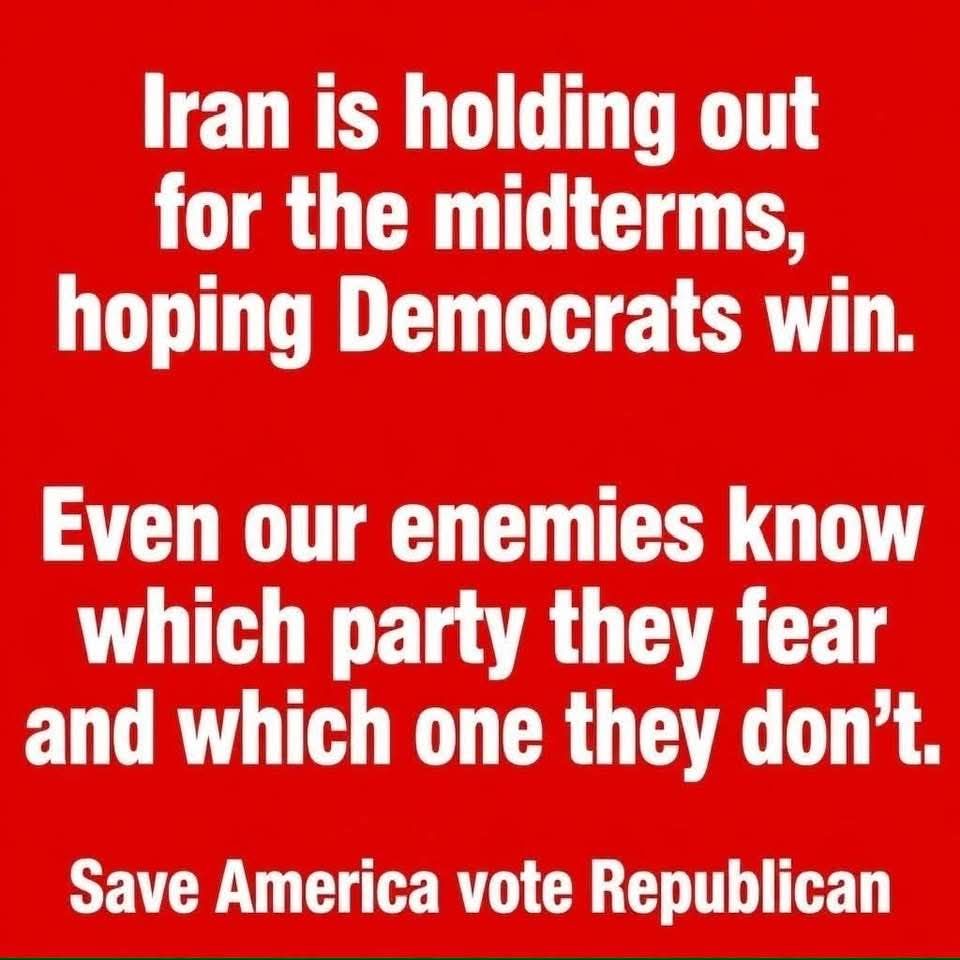
The Iranian people realize that they are dealing with a nation that is torn in two. They’re going to try and drag this out through the midterms, if not all the way out to November. They would like nothing more than to get our treasonous democrats back into office. So that they can maintain thair systems of control over multiple nations economies. They will drag this process on as long as possible. The press and the democratic socialists are on their side, and they know it. – Andrew Hoffman
Former Islamic extremist says the goal of Muslims and jihadists is to make America a Muslim county
Imam Mohammad Tawhidi says Muslims are uniting with Democrats to use them to make that happen
“When I was an extremist, Islamist, fundamentalist, I would only vote left — I saw them as very stupid. I would fear the conservatives because they come with principle”
“What is the fundamentalist and jihadi agenda for America?”
“The future of America has to be Muslim”
When you have so many prominent Muslims coming out and saying the goal is to make America an Islamic country, at some point you have to believe them
We have to stop this. We need mass deportations
We need a Great Awakening or we are damned. Don’t be WOKE