A Georgia pastor has gone viral after a sermon in which he urged Christians to pray for Donald Trump, saying he believes God is “using” the president in ways that may be difficult for people to understand.
Otha L Turnbough, pastor of Lionheart Church in Georgia, told congregants not to speak negatively about the president, but instead to pray for him, emphasizing that God often works through unexpected and controversial figures.
“God is using that man outside your understanding,” Turnbough said. He encouraged listeners to look to the Old Testament, where God used unlikely leaders and prophets to confront evil and carry out judgment, arguing that similar biblical patterns can be seen today.
Turnbough suggested that while some of Trump’s actions provoke strong reactions, they should be viewed through a spiritual lens rather than an emotional one. He told the congregation that when God moves to judge evil, the individuals He uses are often misunderstood or viewed as unconventional. #Trump #trumpadministration
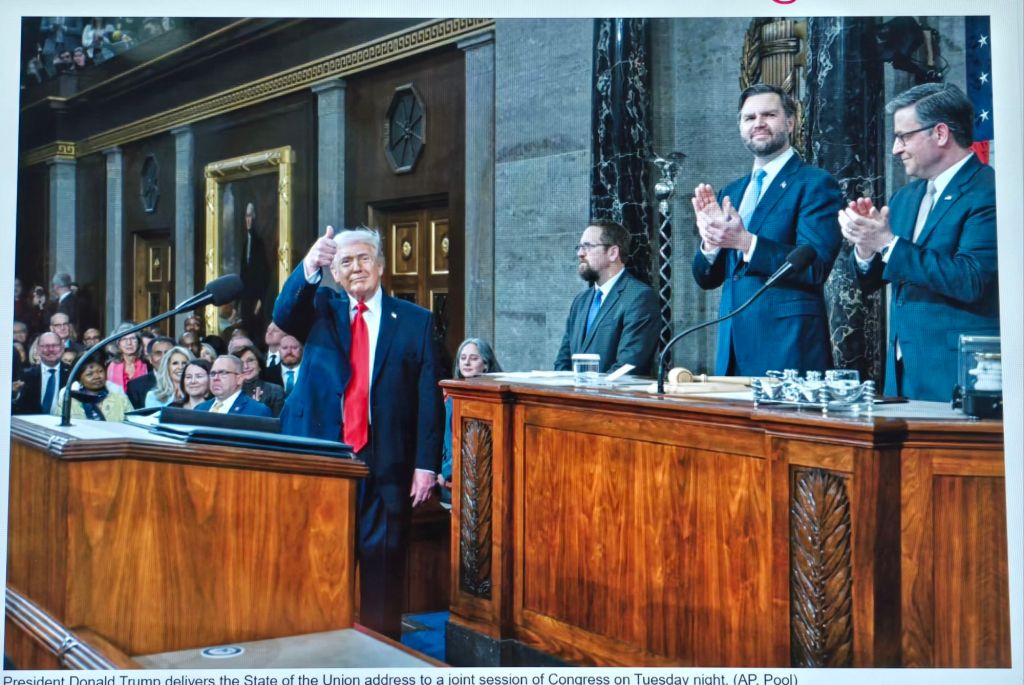
Sadly Congressional Democrats demonstrated that they hate almost everything this nation stands for tonight.
Nevertheless our nation is back, in the last years we have had a turn-around for the ages. Our border is secure. Gas prices have decreased, inflation is down, the border is secure, and so much more.
This will be a year to celebrate America and thank God for His blessings on us.
11 YR OLD SHOOTS ILLEGALS thanks FOX NEWS for reporting it. BUTTE , MONTANA Shotgun preteen vs. Illegal alien Home Invaders…Two illegal aliens, Ralphel Resindez, 23, and Enrico Garza, 26, probably believed they would easily overpower home-alone 11-year-old Patricia Harrington after her father had left their two-story home. It seems the two crooks never learned two things: 1) they were in Montana and 2) Patricia had been a clay-shooting champion since she was nine. Patricia was in her upstairs room when the two men broke through the front door of the house. She quickly ran to her father’s room and grabbed his 12-gauge Mossberg 500 shotgun. Resindez was the first to get up to the second floor only to be the first to catch a near point blank blast of buckshot from the 11-year-old’s knee-crouch aim. He suffered fatal wounds to his abdomen and genitals. When Garza ran to the foot of the stairs, he took a blast to the left shoulder and staggered out into the …street where he bled to death before medical help could arrive. It was found out later that Resindez was armed with a stolen 45-caliber handgun he took from another home invasion robbery. That victim, 50-year-old David 0’Burien, was not so lucky. He died from stab wounds to the chest.Ever wonder why good stuff never makes NBC, CBS, PBS, MSNBC, CNN, or ABC news……..? An 11 year old girl, properly trained, defended her home, and herself……against two murderous, illegal immigrants…….and she wins. She is still alive. Now THAT is Gun Control! Thought for the day…. Calling an illegal alien an ‘undocumented immigrant’ is like calling a drug dealer an ‘unlicensed pharmacist.’ I like this kind of E-mail! American citizens defending themselves and their homes
Joe Rigney Eleven years ago today, I helped plant Cities Church.
I served as a pastor there for 8 years.
This is a normal Baptist Church.
They worship Jesus.
They love each other.
They seek the good of their neighbors.
And the Left hates them and wants to shut them down, because one of their pastors serves his country in law enforcement, putting his life on the line to remove rapists and violent criminal illegal immigrants from our streets.
The Democrats are the party of lawlessness, of cultural decay, social disorder, and death.
It’s time for Christian boldness—for courage and clarity about Jesus and sin.
And it’s time for our governing officials to fulfill their mandate and become a terror to evil conduct. They do not bear the sword in vain.
That’s what our nation needs.
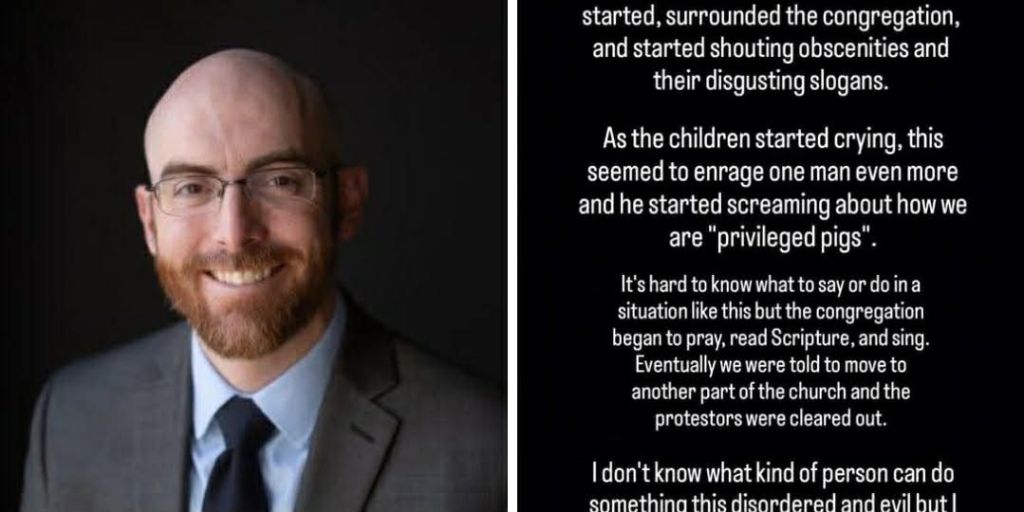
‘SHAME ON YOU!’ Anti-ICE agitators storm a Minnesota church during Sunday service to confront a pastor over his alleged ties to federal immigration enforcement.
I grew up reading the Little House on the Prairie Series. Did you as well?
Laura Ingalls Wilder never intended to become one of the most influential storytellers in American history. She wasn’t thinking about books or fame. She was simply trying to survive a childhood shaped by hunger, hardship, constant movement across the American frontier.
Born February 7, 1867, in a 1 room cabin deep in the Big Woods of Wisconsin. Her father, Charles Ingalls, Pa was a man who loved wilderness and disliked neighbors. If another family’s chimney smoke appeared nearby, Pa felt crowded.
The family packed their wagon and moved, again and again, from Wisconsin to Kansas, then to Minnesota, lowa, and eventually to Dakota Territory. Laura grew up in covered wagons, half-built cabins, always on land barely settled before they moved on.
Their house had dirt walls, a dirt floor, and a roof made of sod. Grass grew overhead while insects dropped through cracks in the ceiling. It was small, dark, and alive with creatures Laura didn’t want to meet. But it was shelter, and the frontier rarely offered anything better.
During the terrible winter of 1880-81, blizzard after blizzard battered the town of De Smet. Snow buried homes and blocked every supply train.
Without fuel, families twisted dried hay into tight sticks to burn. Without provisions, they ground wheat in coffee mills to make coarse flour.
Weeks passed in darkness and cold so deep the wind seemed to cut. Some families froze or starved. The Ingalls family endured.
Another blow came earlier, when Laura was 13, her sister Mary was 15. Mary fell ill with a severe fever.
When it passed, she was blind. The loss reshaped the family, and Laura tried to become Mary’s eyes, describing the world in careful detail. The habit of noticing everything-the curve of a hill, the way sunlight touched grass—would decades later shape her unmistakable writing style.
At 18, Laura married Almanzo Wilder, a homesteader ten years older. She hoped their life would be different from her childhood-steady, predictable, rooted. But within the first few years, disaster followed disaster.
Diphtheria left Almanzo partially paralyzed. Their barn burned. Crops failed in punishing weather. Their baby boy died before he was a month old. They lost nearly everything and eventually left SD to start over in Missouri.
The farm they named Rocky Ridge would become their final home. Laura raised chickens, kept accounts, and stitched together an existence through frugality and hard work. In her 40s and 50s she began writing short articles for farm papers— practical, clear, and surprisingly elegant pieces on rural life.
Their daughter, Rose Wilder Lane, a successful writer and journalist, urged her mother to record her childhood memories. Laura hesitated. She was in her 60s. She had no formal training. Why would anyone read her stories of log cabins, dugouts, blizzards, and pioneer struggles?
Rose helped transform these manuscripts into publishable books—how much shaping she did remains debated, but the vision was Laura’s. The first book, Little House in the Big Woods, 1932.
Farmer Boy, Little House on the Prairie, On the Banks of Plum Creek, and many others followed. They were based on real events but arranged with storytelling instinct.
Laura continued publishing into her late 70s. She lived to see her books adopted in classrooms, cherished by families, and woven into the fabric of American childhood. She died at 90, on the farm she and Almanzo had built from nearly nothing.
Wilder didn’t simply write children’s books. She preserved a vanished world. She documented ordinary families endured hunger, weather, grief.
She showed survival required discipline, courage, and tenderness. And she proved that it’s never too late to tell your story. At sixty-four, she picked up a pencil and changed American literature.
“Just so we are clear. If a foreigner comes to your country and demands you accept their culture as your culture or demands that you change your beliefs for their religious needs, that is not a foreigner.”
“That is not an immigrant.”
“That is an invader.”
America can no longer deny that a Muslim invasion is a reality. The question is, what are we going to do about it?
The student in the university may be so surrounded by an environment so polluted by the forces of darkness that he or she feels forced to compromise core beliefs in order to thrive or even survive. It is difficult to shine in an atmosphere heavily polluted by the forces of darkness, especially if the professors happen to be deeply under the sway of those forces. We are told, by their fruit ye shall know them. The business person, likewise, is often under immense pressure to compromise ethical and legal standards in order to satisfy the greed and dishonesty of associates or maybe even in an effort to keep the business afloat, “Just this one time…” which is a subtle snare that leads to further compromise. Unless the Christ follower is prepared for evil assaults on his mind and heart, he will have great difficulty maintaining a Christian witness of personal holiness. Our reaction to the sinful world around us, however, must be more than just defensive. We must be concerned not only for our own purity of mind and heart, but also for the eternal destiny of those who would pollute us.
Just research the stuff folks, it’s not that hard….
It all makes sense now!! A must read…. This is why I don’t believe in coincidences anymore!! Wow!! “Things you must know to be informed… YES, THE GOVERNOR OF MICHIGAN USED TO WORK FOR GEORGE SOROS. *YES, CALIF GOV. GAVIN NEWSOM IS NANCY PELOSI’S NEPHEW
YES, ADAM SHIFF’S SISTER IS MARRIED TO ONE OF GEORGE SOROS’ SONS.
YES, JOHN KERRY’S DAUGHTER IS MARRIED TO A MULLAH’S SON IN IRAN.
YES, ABC NEWS EXECUTIVE PRODUCER IAN CAMERON IS MARRIED TO SUSAN RICE, OBAMA’S FORMER NATIONAL SECURITY ADVISER.
YES, CBS PRESIDENT DAVID RHODES IS THE BROTHER OF BEN RHODES, OBAMA’S DEPUTY NATIONAL SECURITY ADVISER FOR STRATEGIC COMMUNICATIONS.
YES, ABC NEWS CORRESPONDENT CLAIRE SHIPMAN IS MARRIED TO JAY CARNEY, FORMER OBAMA WHITE HOUSE PRESS SECRETARY.
YES, ABC NEWS AND UNIVISION REPORTER MATTHEW JAFFE IS MARRIED TO KATIE HOGAN, OBAMA’S FORMER DEPUTY PRESS SECRETARY
YES, ABC PRESIDENT BEN SHERWOOD IS THE BROTHER OF ELIZABETH SHERWOOD, OBAMA’S FORMER SPECIAL ADVISER.
YES, CNN VP VIRGINIA MOSELEY IS MARRIED TO TOM NIDES, FORMER HILLARY CLINTON’S DEPUTY SECRETARY. THIS IS WHAT YOU CALL A “STACKED DECK”. IF YOU HAD A HUNCH THE NEWS MEDIA WAS SOMEWHAT RIGGED AND YOU COULDN’T PUT YOUR FINGER ON IT, THIS MIGHT HELP YOU SOLVE THE PUZZLE. Now you know why no one is investigated. They all have their hands in the cookie jar! You might remember James Comey who investigated the Clinton email scandal and the Clinton Foundation, and made the final decision to not recommend prosecution by the DOJ. It turns out that the Clinton Foundation was audited by the law firm DLA Piper. One of the executives there was in charge of the Clinton Foundation audit. Who was it? Peter Comey, James Comey’s brother. Peter Comey held an executive position with the Washington law firm that did the audit of the Clinton foundation in 2015. Peter Comey was officially DLA Piper “Senior Director of Real Estate Operations for the Americas,” in 2015 when the Clinton Foundation scandals first broke and Hillary was preparing her Presidential campaign. Not only was DLA Piper, the firm where Comey’s brother worked involved in the audit of the Clinton Foundation, but according to the foundation’s donor records, DLA Piper has given between $50 – 100k to the Foundation It gets even cozier. DLA Piper executive Douglas Emhoff is taking an extended leave of absence from the firm. Who is Douglas Emhoff? He is the husband of KAMALA HARRIS! Just a coincidence? Amazing if it is. You can’t make this stuff up! And it only gets worse. This “Family Tree” will make your head spin . . THE SWAMP IS DEEP!! Dominion (voting machine provider) serves 40% of the US market. It is in 30 states – – The state of Texas rejected the machines.
Admiral Peter Neffenger is on Biden’s transition team.
Neffenger was the President of the board of Smartmatic
Smartmatic (another voting machine supplier) entered into an agreement with Dominion in 2009
Smartmatic counted votes in Venezuela
Smartmatic is connected to Philippine voter fraud
Smartmatic is run by Lord Mark Malloch Brown who works for George Soros (-he and Brown are life-long friends)
Brown chairs the Boards of a number of non-profit boards including the Open Society Foundation,
Brown chairs the Centre for Global Development.
Open society of course is owned by George Soros
Smartmatic partnered with DLA Piper Global
Douglas C. Emhoff works at DLA Piper Global
Douglass C. Emhoff is Kamala Harris’s husband
Guess who owns Dominion? – -Blum Capital Partners, L.P.
Guess who is on the board for the company? — Richard Blum.
Richard C. Blum is Dianne Feinstein’s husband.
Nancy Pelosi’s husband is also a major investor
An aide to Nancy Pelosi, Nadeam Elshami, was hired by Dominion Voting Systems And it goes on…..
Dominion Voting Systems is listed on the Clinton Foundation website.
Dominion Voting is listed as a $25,000 -$50,000 donor to the Clinton Foundation in 2014 by The Washington Post
Georgia Governor Kemp used Dominion Voting after Texas and Florida rejected them
Dominion has a lobbyist named Jared Thomas
Jared Thomas was Governor Brian Kemp’s chief of staff and press secretary from 2012 to 2015
You must remember the Feinstein-Kavanaugh-Soros connections to understand this next information
Debra Katz (Christine Ford’s lawyer) worked for George-Soros at the Open Society Foundation.
Debra Katz (Christine Ford’s lawyer) also worked at Project on Government Oversight (POGO).
POGO is funded by Soros’s Open Society Foundation.
POGO is the co-signer of the letter Diane Feinstein presented against Kavanaugh’s nomination.
Kamala Harris did not prosecute OneWest Bank for their fraud when she had the authority – Soros owned OneWest Bank.
Now you know why a woman who placed 7th in her own State when running for President is now VP! VERY SCARY STUFF and obvious why they need President Trump out of the picture!
🚨EXPLAINER – Biden, Harris, and their liberal allies in Congress are doing everything in their power to expedite the process of turning illegal aliens into citizens in an effort to radically transform the United States and influence the outcome of future elections.
Here’s a step-by-step on how their scheme works…
On their first day of office, Biden and Harris rescinded every critical Trump-era immigration policy and opened our borders to the world.
The result? The greatest immigration crisis in history. The overwhelming majority of those entering illegally were granted “parole” by the Biden-Harris DHS. This means that they were not only released from custody into the interior of the United States, but that they were also eligible to receive additional benefits once in the United States.
To make matters worse, in January 2023, the Biden-Harris Administration launched two unlawful federal programs to fast-track illegals into the United States so they don’t even have to try to sneak over the border–again relying upon an abuse of the “parole” authority.
1. First, they created the “CBP One” app — a phone app for illegals to click a few buttons, schedule their arrival, show up at the border, and be let into the interior of the United States en masse through abuses of the parole authority. Over 813,000 illegals have entered through this program already.
2. Second, they created the “CHNV” program – without Congressional approval – to fly 30,000 illegals from their country of origin every single month directly into the United States on commercial flights. Over 530,000 illegals have been flown into the interior of the United States since this program launched.
Once these aliens are paroled into the United States, they can obtain employment authorization and undercut the wages of United States workers. Even worse, the ordinary bars to obtaining a green card that would apply to most illegal aliens are removed. They can get a marriage or employment-based visa and become a lawful permanent resident/green card holder. Once they have had a green card for five years, they can naturalize and become citizens.
In addition, the Biden-Harris Administration is fast-tracking citizenship applications and naturalizing as many permanent residents as they can, as quickly as they can.
It gets worse…the mere presence of these millions of illegal aliens creates an entirely different set of problems for the security of our elections in the near term.
The federal government’s voter registration form does NOT require applicants to provide proof of citizenship. It merely requires voter registrants to sign a form swearing that “I am a United States citizen.”
The only thing stopping a noncitizen from registering to vote is their signature and promise.
Anyone who tries to tell you that there aren’t illegal aliens or noncitizens who have lied on this form is lying to you. Furthermore, there is the issue of faulty voter registrations at DMVs across the country, with clerks inadvertently or intentionally clicking a button and indicating incorrectly that a particular person obtaining a driver’s license–which many states provide for illegal aliens–is a citizen.
Illegal aliens and other noncitizens are on voter rolls all across the United States.
Accordingly, concerned States across the nation have submitted requests – under 8 U.S.C. § 1373(c) – to the Biden-Harris DHS to verify the citizenship or immigration status of registered voters on voter rolls when there are any reliable indicators that a voter may not be a U.S. citizen. However, the Mayorkas-led DHS is not providing states with access to this critical information.
Further, the Biden-Harris Administration has actually sued the State of Alabama for attempting to take reasonable measures to remove illegal aliens and noncitizens from their voter rolls.
AFL had to sue every county in the state of Arizona for refusing to purge potential noncitizens from the voter rolls—as required by AZ state law. We also just sued the Secretary of State in Arizona for illegally withholding a list of 218,000 registered voters who did not provide proof of citizenship.
Meanwhile, Biden and Kamala’s allies in Congress pushed to pass a Senate border bill that would lead to even more illegal aliens getting asylum, green cards, and ultimately pathways to citizenship.
Kamala has also pledged to support a pathway to citizenship for every illegal alien in the United States This would create tens of millions of additional voters across the country.
This is not a conspiracy, and this is not a warning of what *might* happen. This is happening right now. This is the reality under the Biden-Harris Administration.







 pastorwardclinton